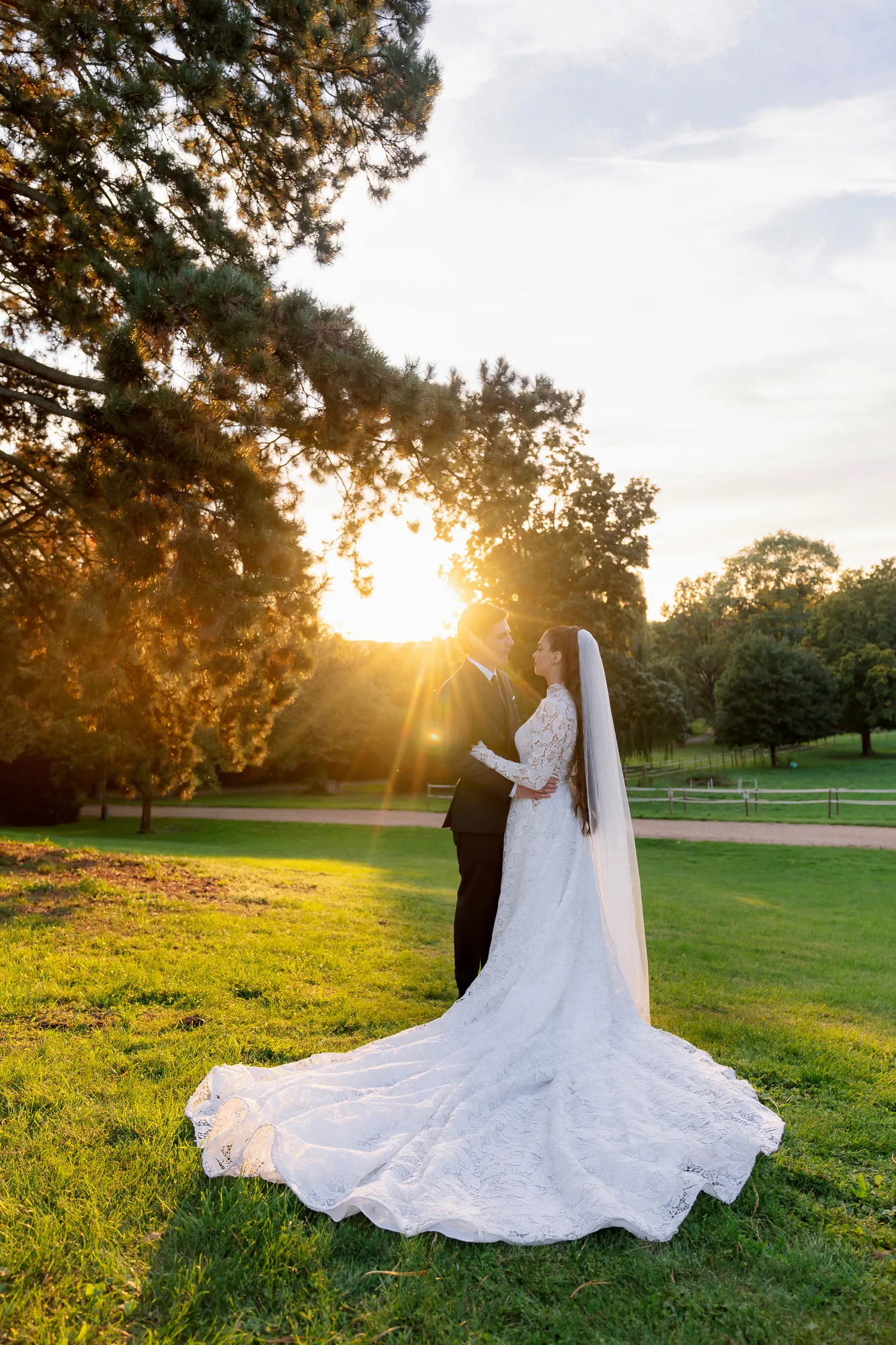
Yes, you can have both. Couples who compare editorial and documentary wedding photography usually want the same thing: photographs with the care of a magazine page, and a day that does not turn into a photo shoot. The two approaches are not separate boxes. They are two ways of working that a photographer moves between, sometimes within the same hour, and the balance between them shapes how your wedding feels.
The short answer: you do not have to choose only one
Documentary photography means observing. The photographer watches what happens and finds the frame without asking anyone to change anything. Editorial photography means shaping. The photographer chooses the place, the light and the direction of movement, then gives you a few words of guidance.
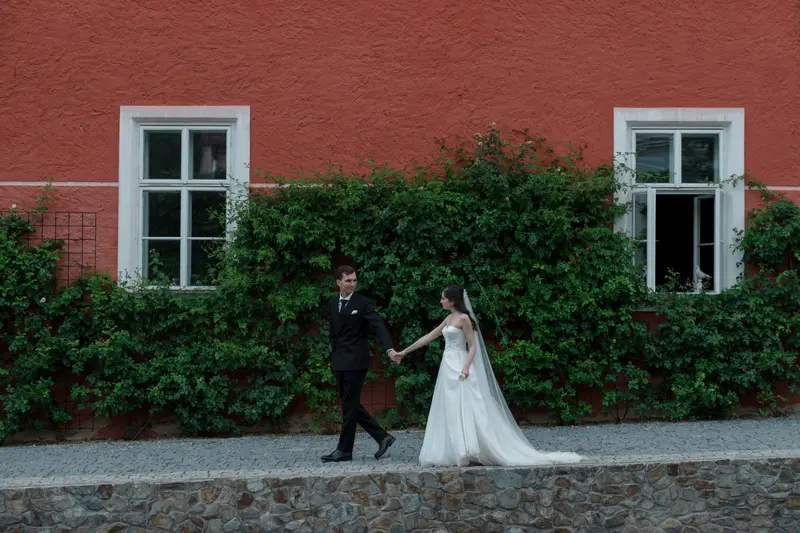
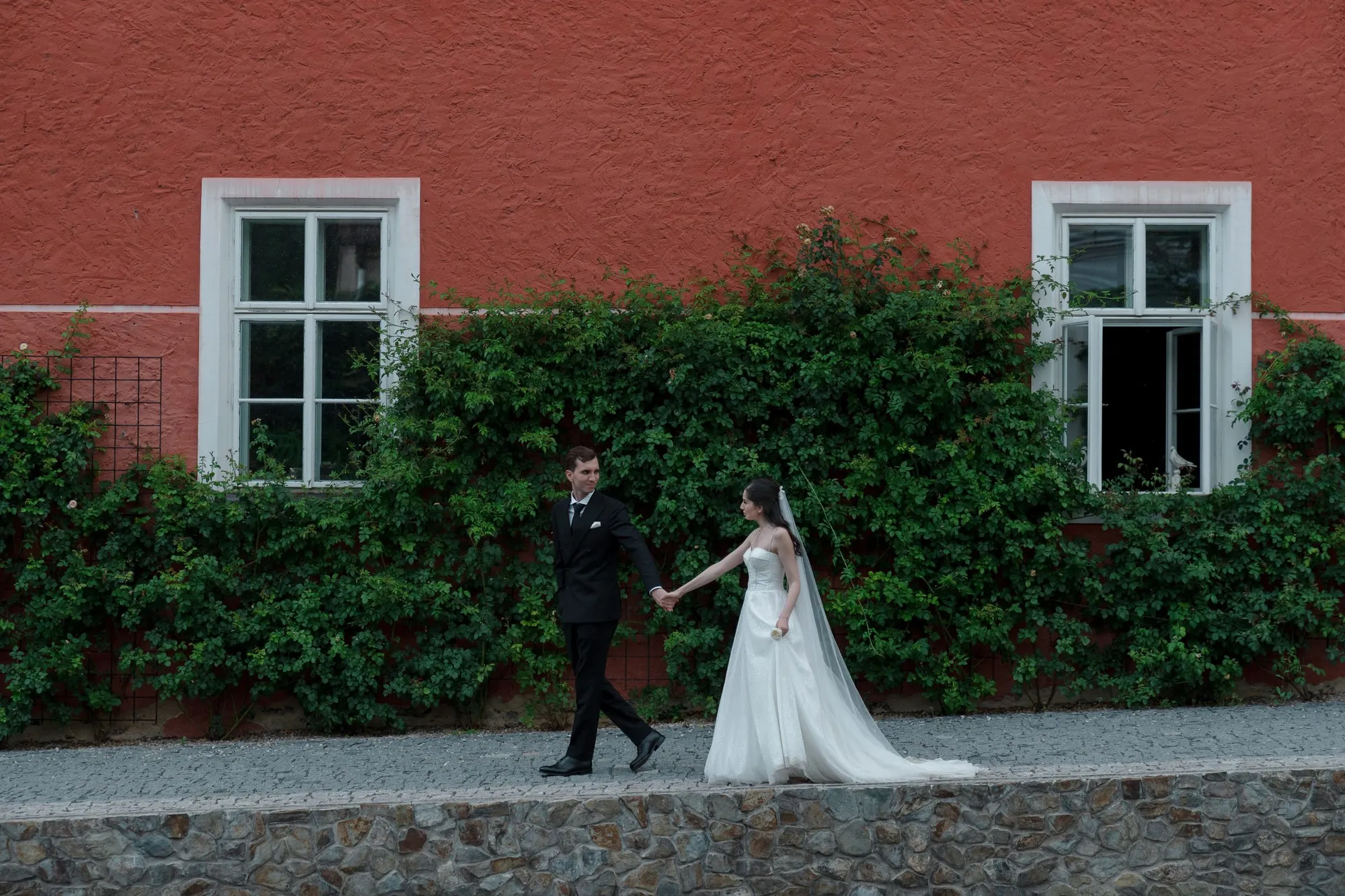
As wedding photographers working across Europe, we find that most weddings have room for both. A ceremony, a speech or a mother seeing her daughter in the dress does not need staging, and staging would only weaken it. A portrait walk along a castle wall is different: a little direction there gives you a stronger photograph in less time.
So the useful question is where in your day you are happy to be guided, and where you would rather be left alone.
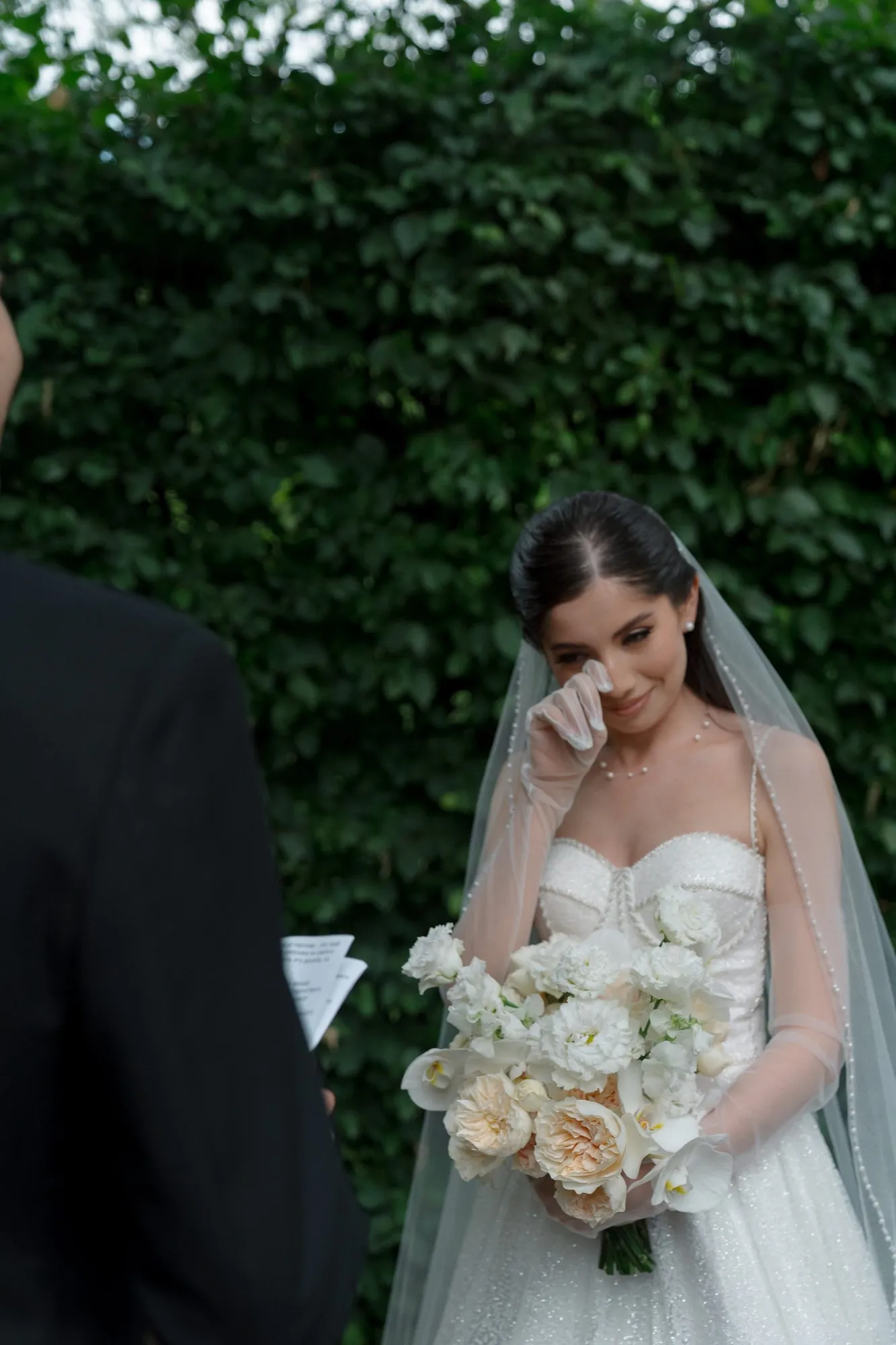
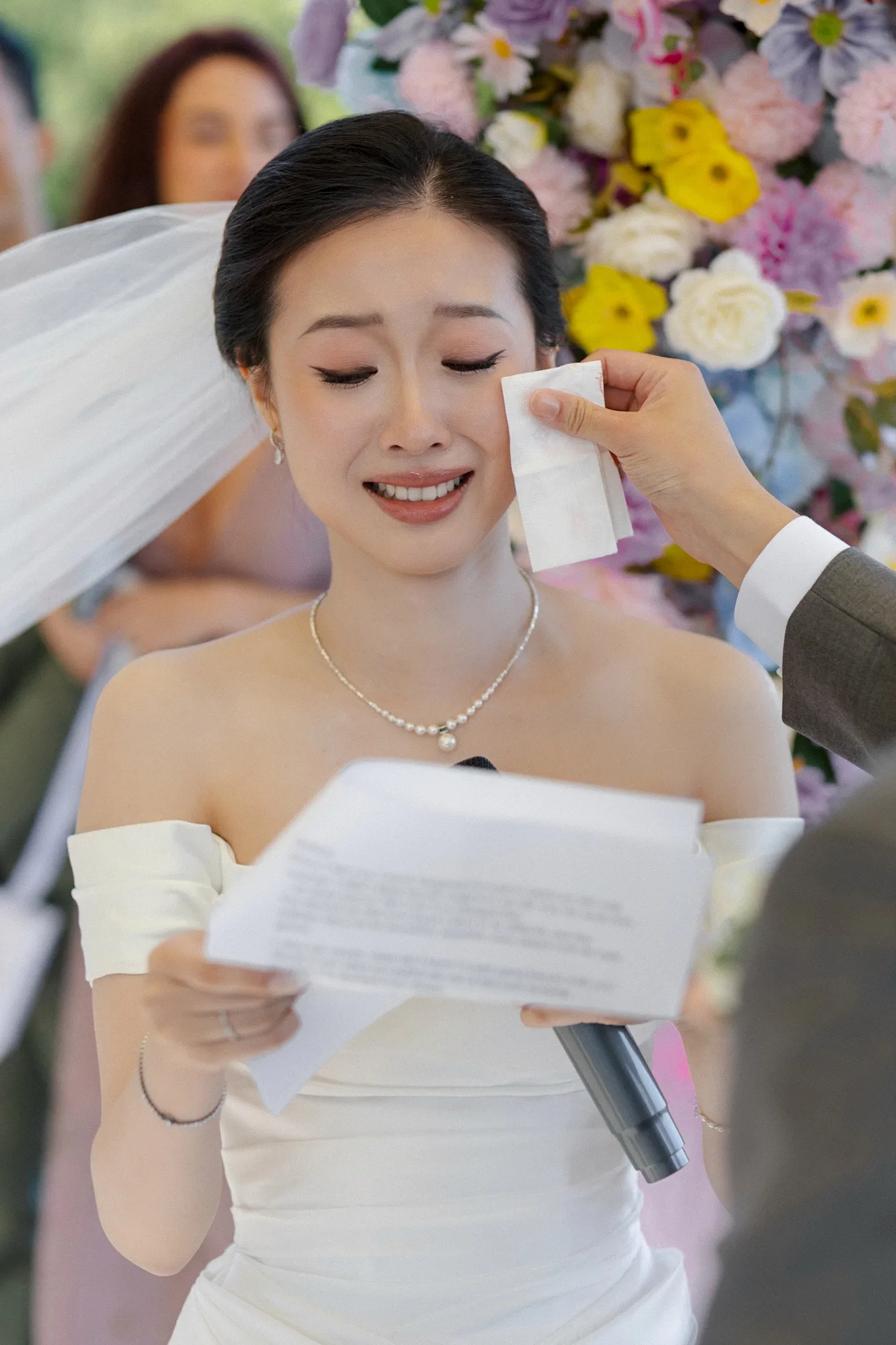
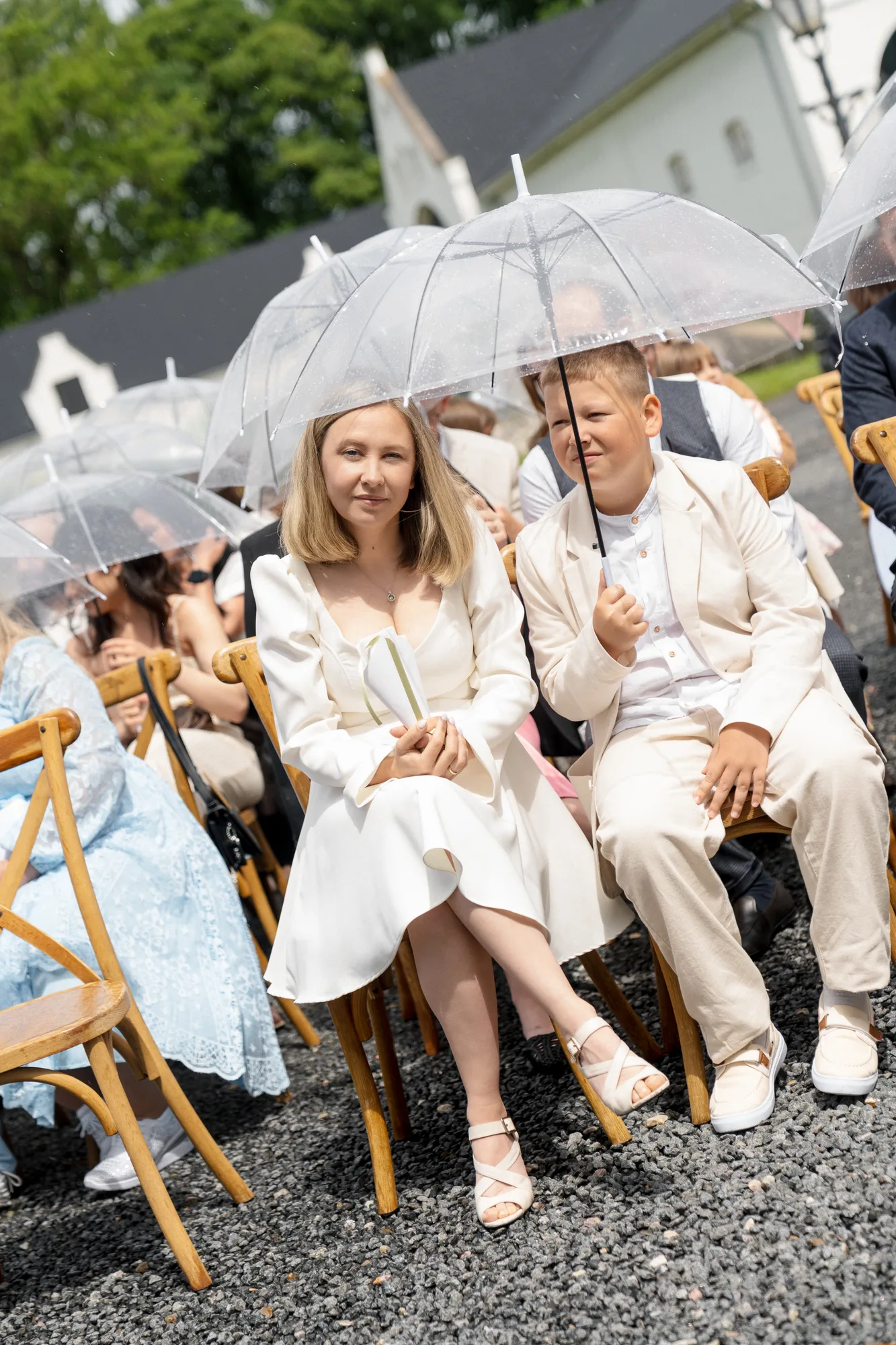
What documentary wedding photography changes about the experience
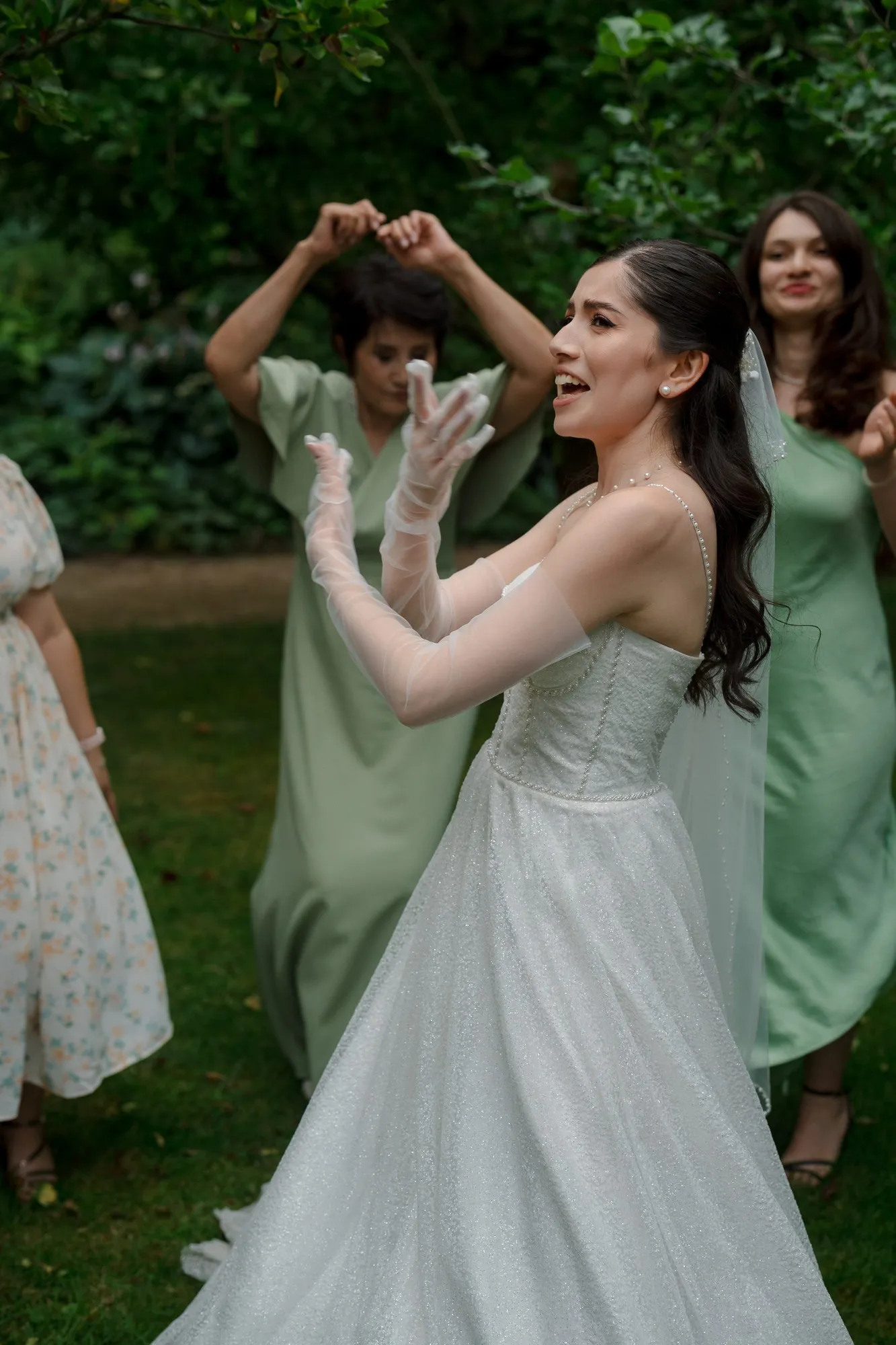
When a photographer works in a documentary way, you mostly forget they are there. Nobody asks you to repeat a kiss or move a little to the left. You spend the day with your guests, and the photographs follow what actually happened: a tear during the vows, a guest laughing at the wrong moment, an outdoor ceremony that carried on in the rain.
Candid does not mean careless. Good documentary work depends on anticipation: knowing where to stand before the moment arrives, reading who is about to react, seeing how the light falls in a room before anyone walks into it. At Matthias and Yuan's wedding in Vienna, the couple read their own vows under an arch of pastel flowers. Both cried, and Matthias wiped Yuan's tears with a tissue. We stayed back and let it happen. Nobody could have set that frame up.
The trade-off is that documentary photography accepts the day as it is. A cramped, dark getting-ready room will look like one, unless the photographer makes small choices about position and light.
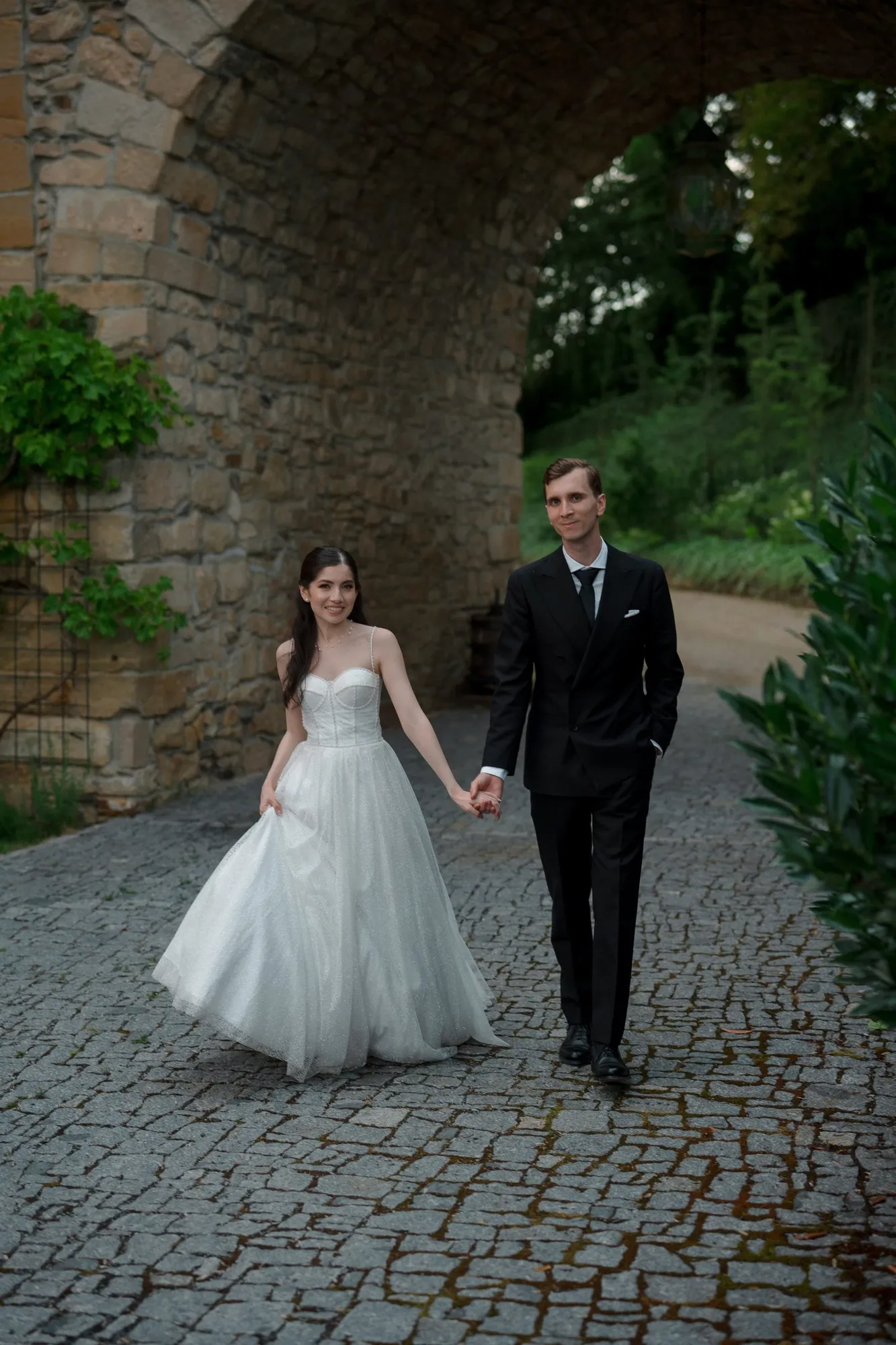
What editorial direction actually looks like on a wedding day
Editorial direction is often imagined as a long list of poses. In our experience it works the other way. Showing people exactly how to pose rarely helps, because nobody can see themselves from the outside. What helps is a direction: where to walk, which way to turn toward the light, how fast to move, where to stop.
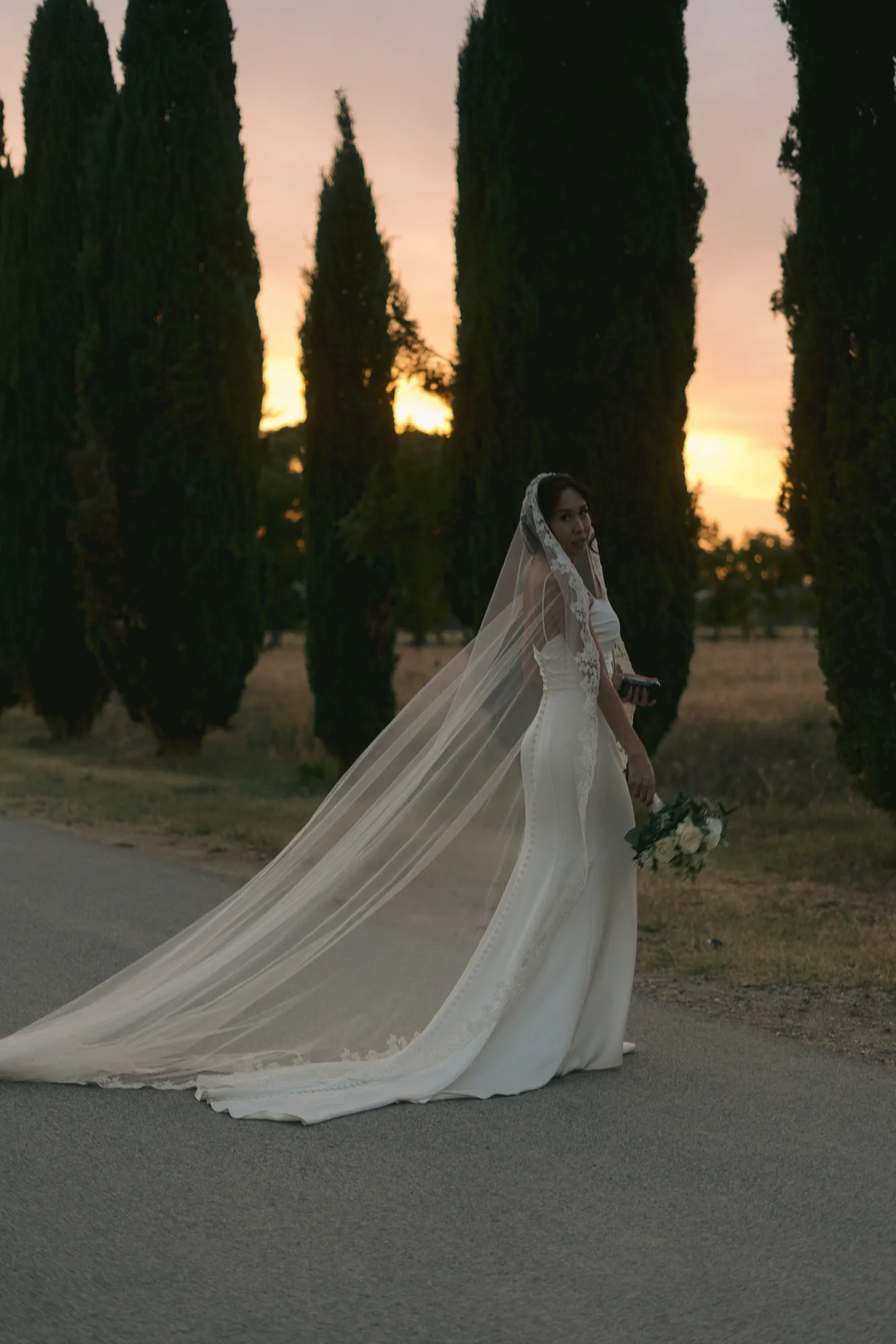
During a portrait walk we choose the place by composition and light, show the couple the line to follow, and then let them be themselves inside that frame. The structure comes from us. The way they hold hands, laugh or lean into each other is theirs.
That is also why editorial does not have to mean hours of posing. Some couples give portraits an hour and enjoy every minute. Others are happier with ten or fifteen minutes, and that can be enough for portraits that feel considered. We do not push anyone past what is comfortable for them, because a tense portrait is not worth the time it takes. How to fit that time into the day without losing your guests is the subject of our wedding photography timeline guide.
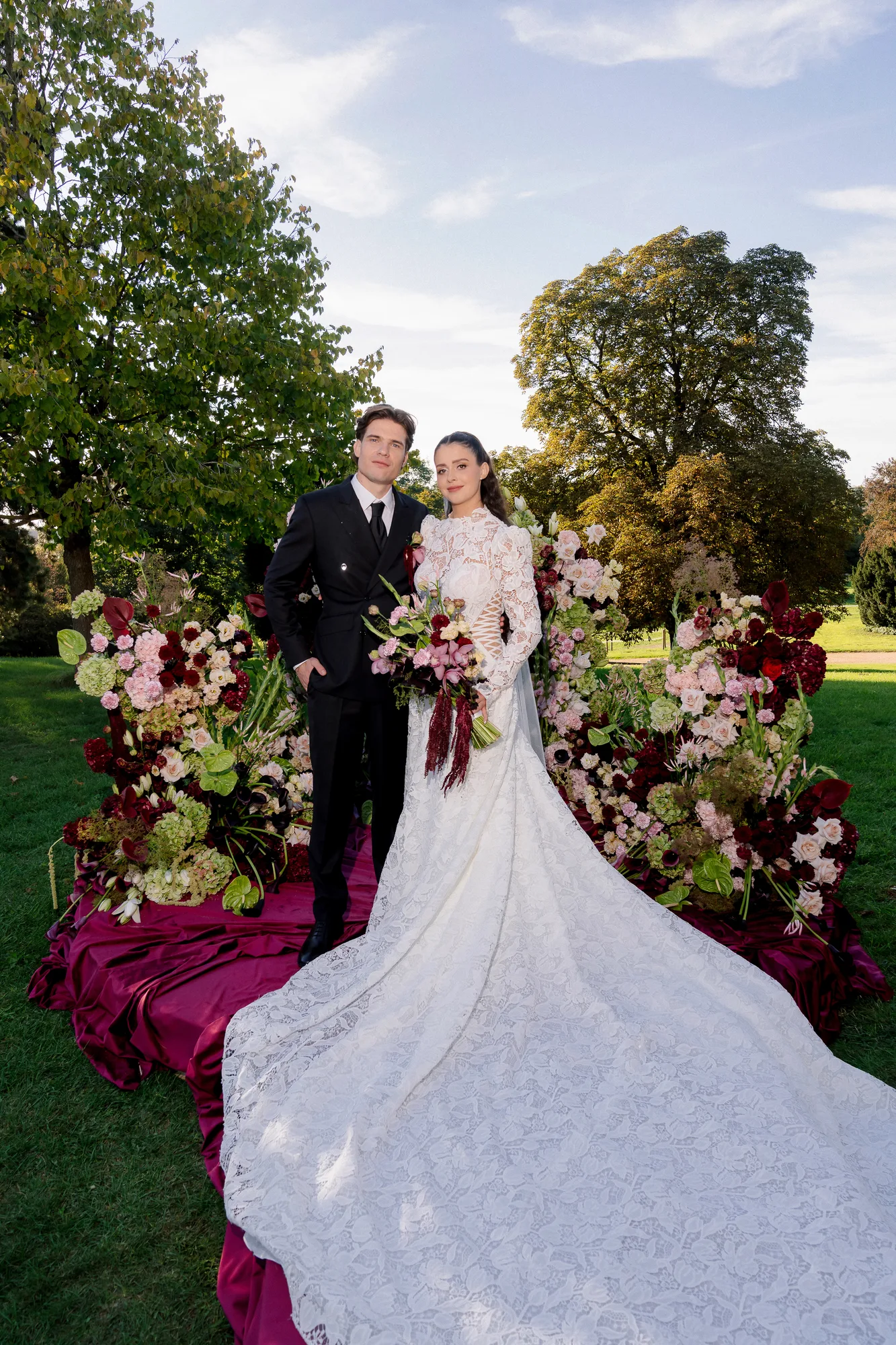
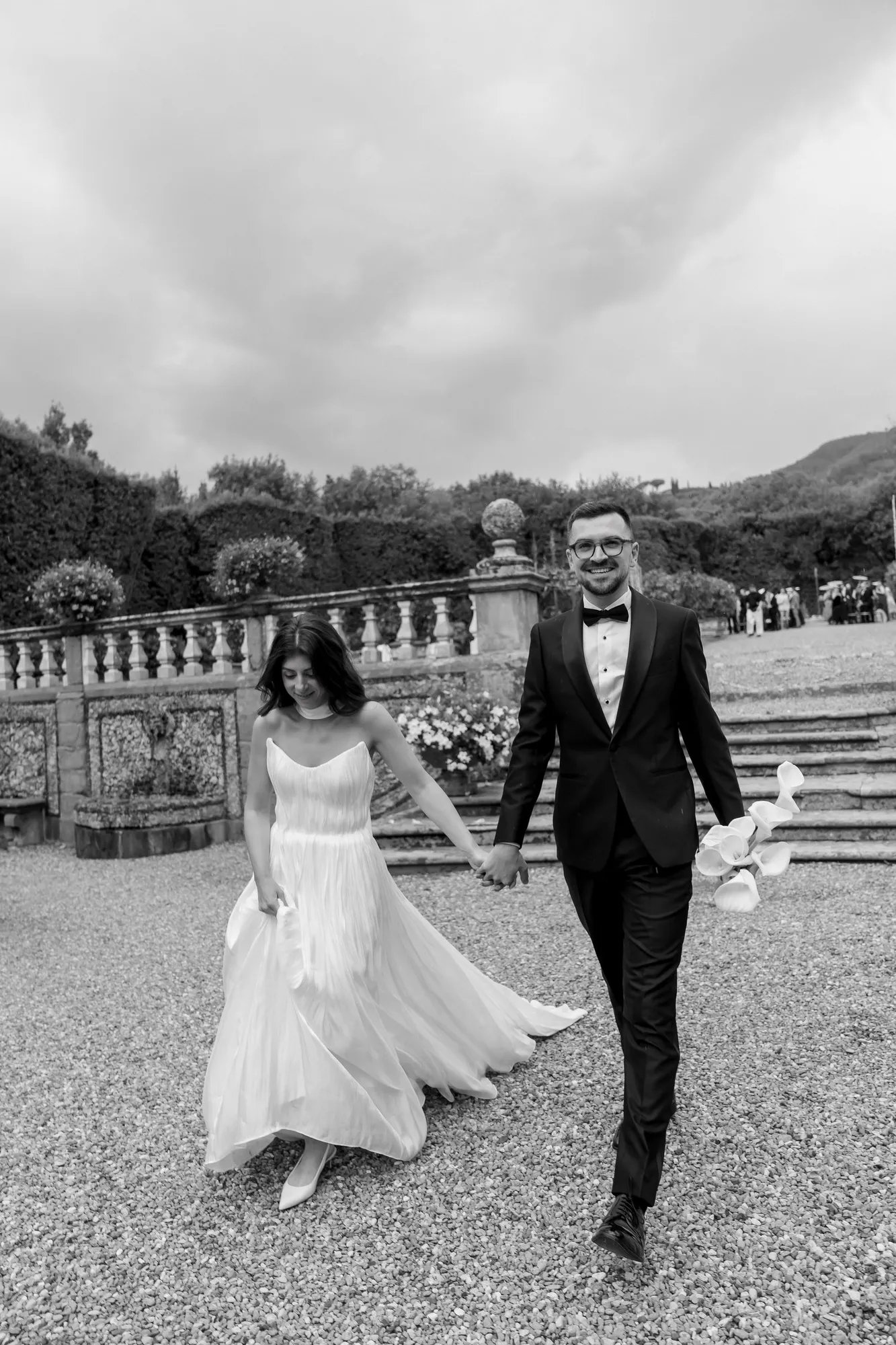
Editorial is a way of working, not an edit
Editorial and documentary describe how photographs are made. Editing is a separate decision. A directed portrait can be finished in natural colour, and a candid ceremony frame can be buried in heavy grain. When you compare photographers, look at the two things separately. Our own editing stays close to natural colour, with black and white where it suits the moment, and avoids trend-driven grain and tints. We want the photographs to look right in ten or twenty years.
The moments that usually benefit from direction
Direction earns its place in the parts of the day that have a practical shape:
- Couple portraits, where light, background and movement decide between a nice photograph and a strong one.
- Family and group photographs, where someone has to organise people quickly so everyone can get back to the celebration.
- A short moment with the venue, when you want the place itself in the picture: a staircase, a courtyard, a view.
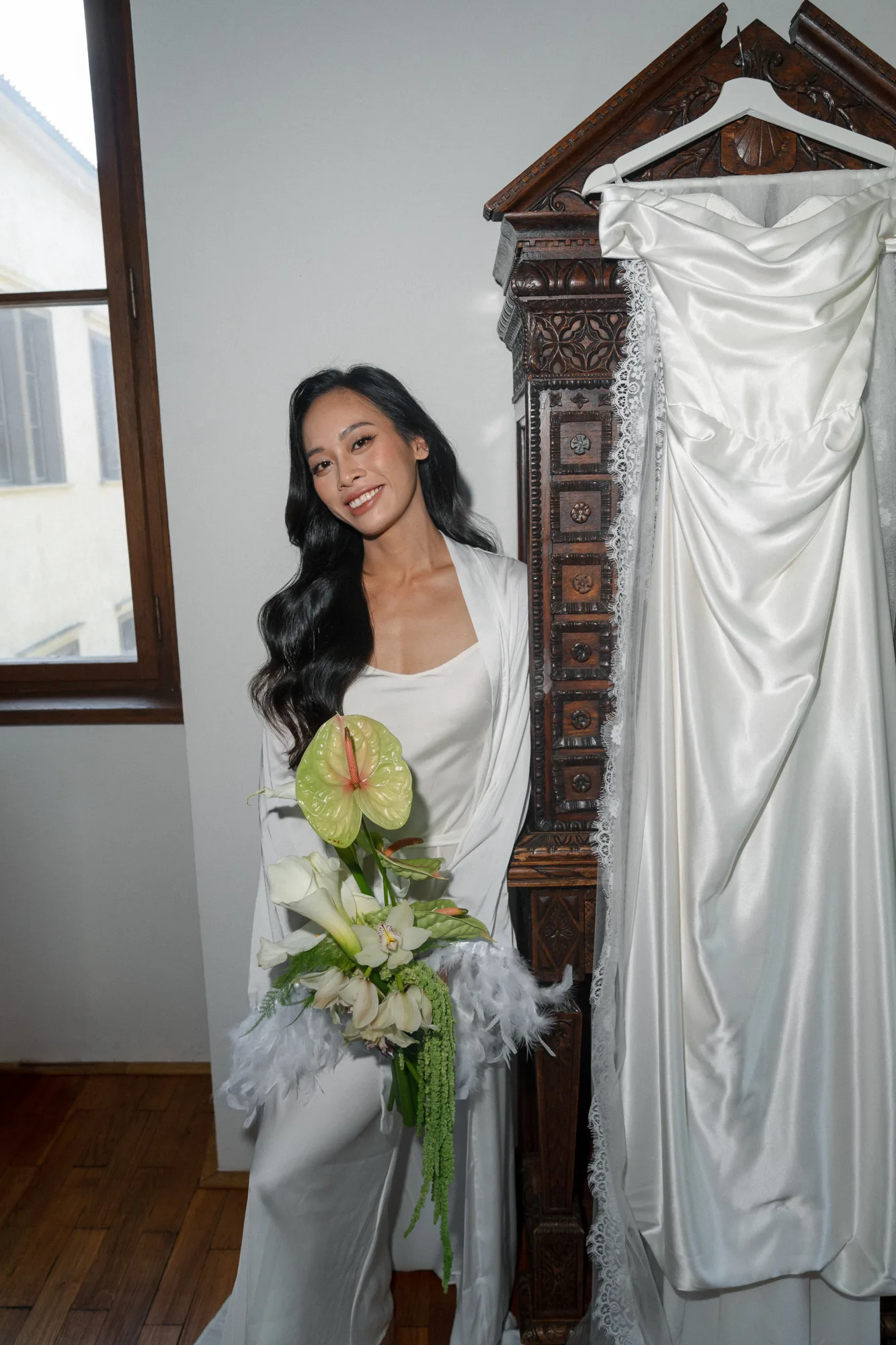
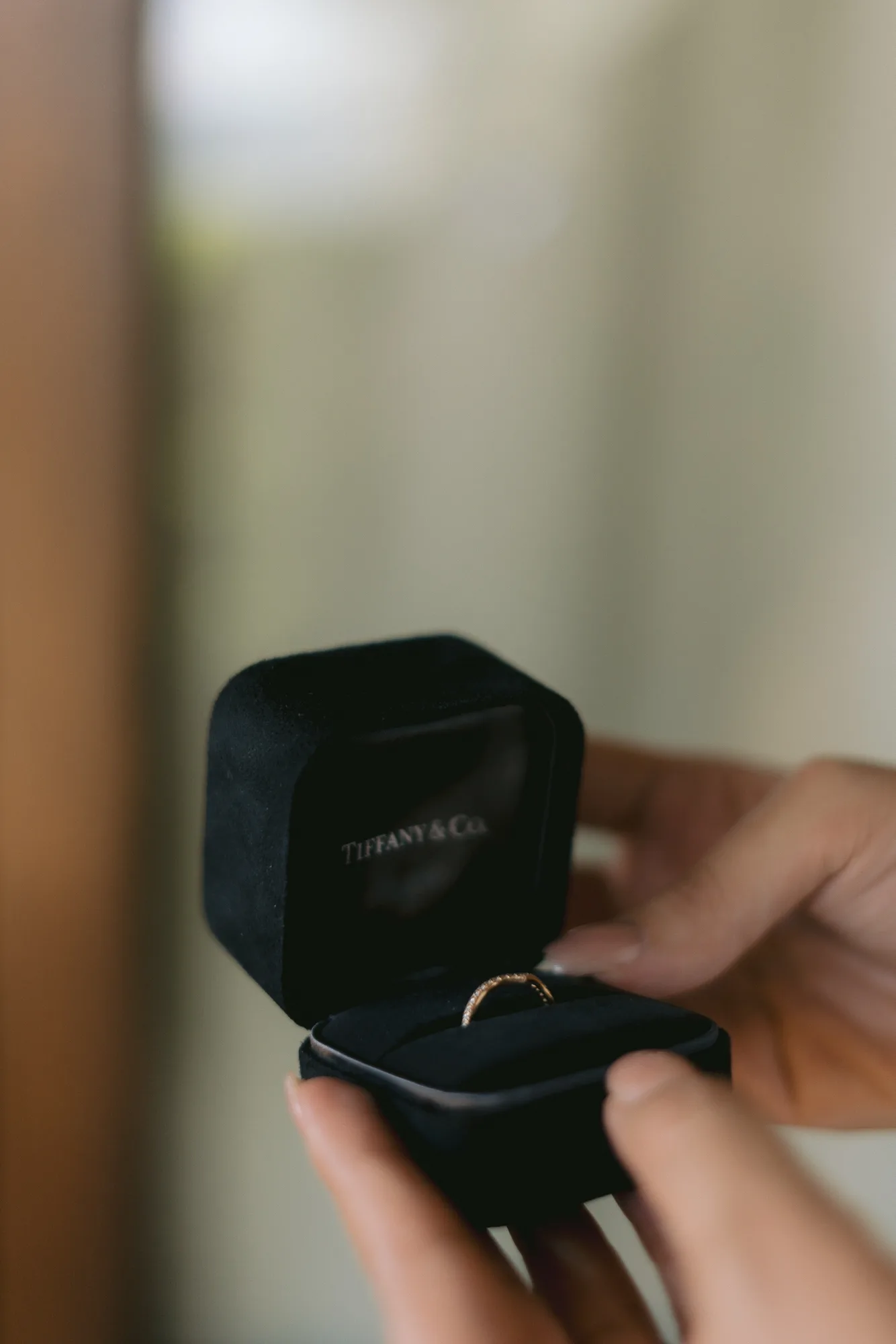
- Details, which are arranged with care while you get ready and take none of your time.
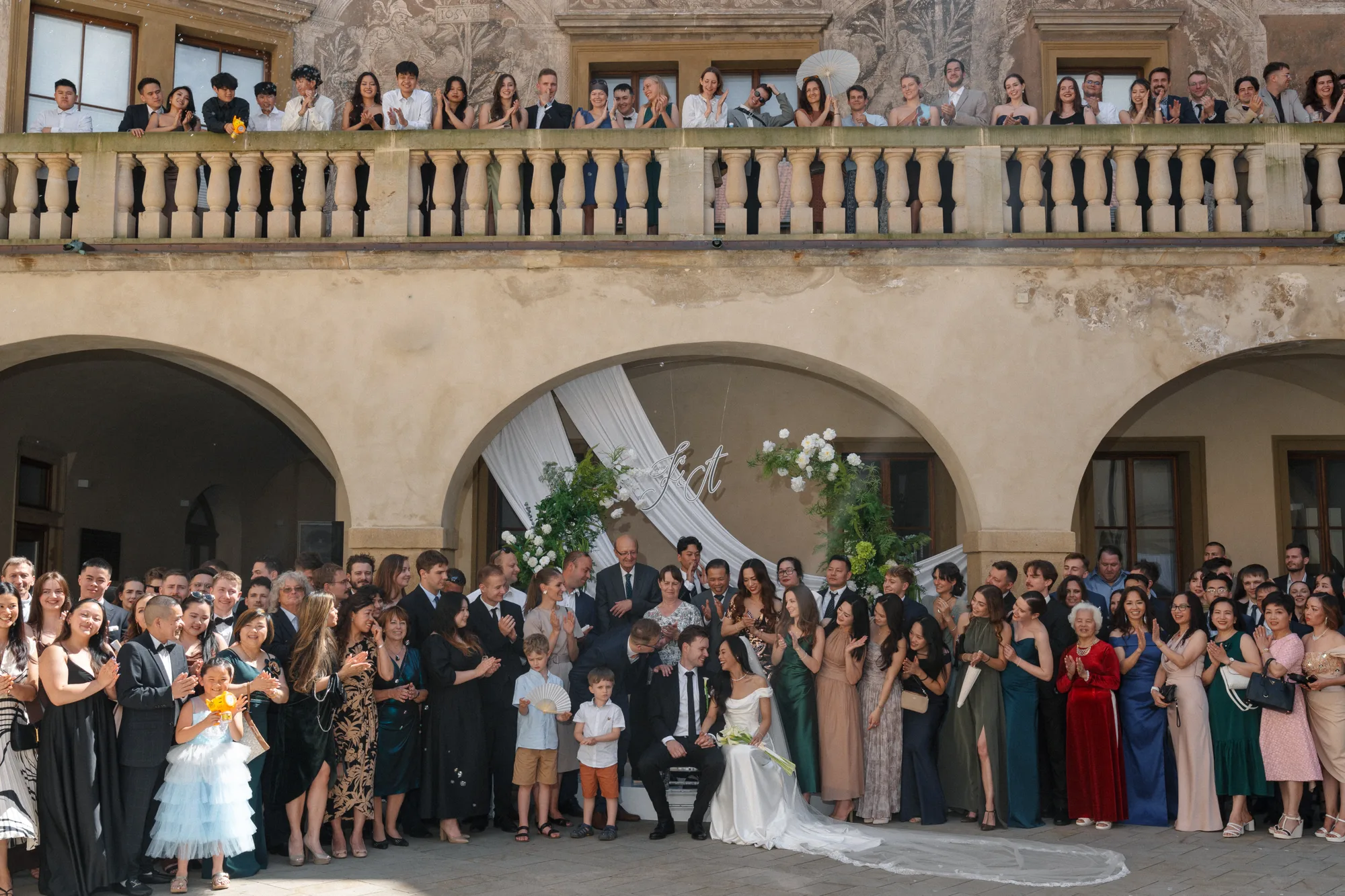
Large group photographs show this best. At Kieu and Antonin's wedding at Martinický palác in Prague, a portrait of all 170 guests was a demanding task. It worked through teamwork, our experience with groups this size and the palace balcony, which let part of the group stand above the rest. A photograph like that does not happen by itself.
The moments that should be allowed to unfold
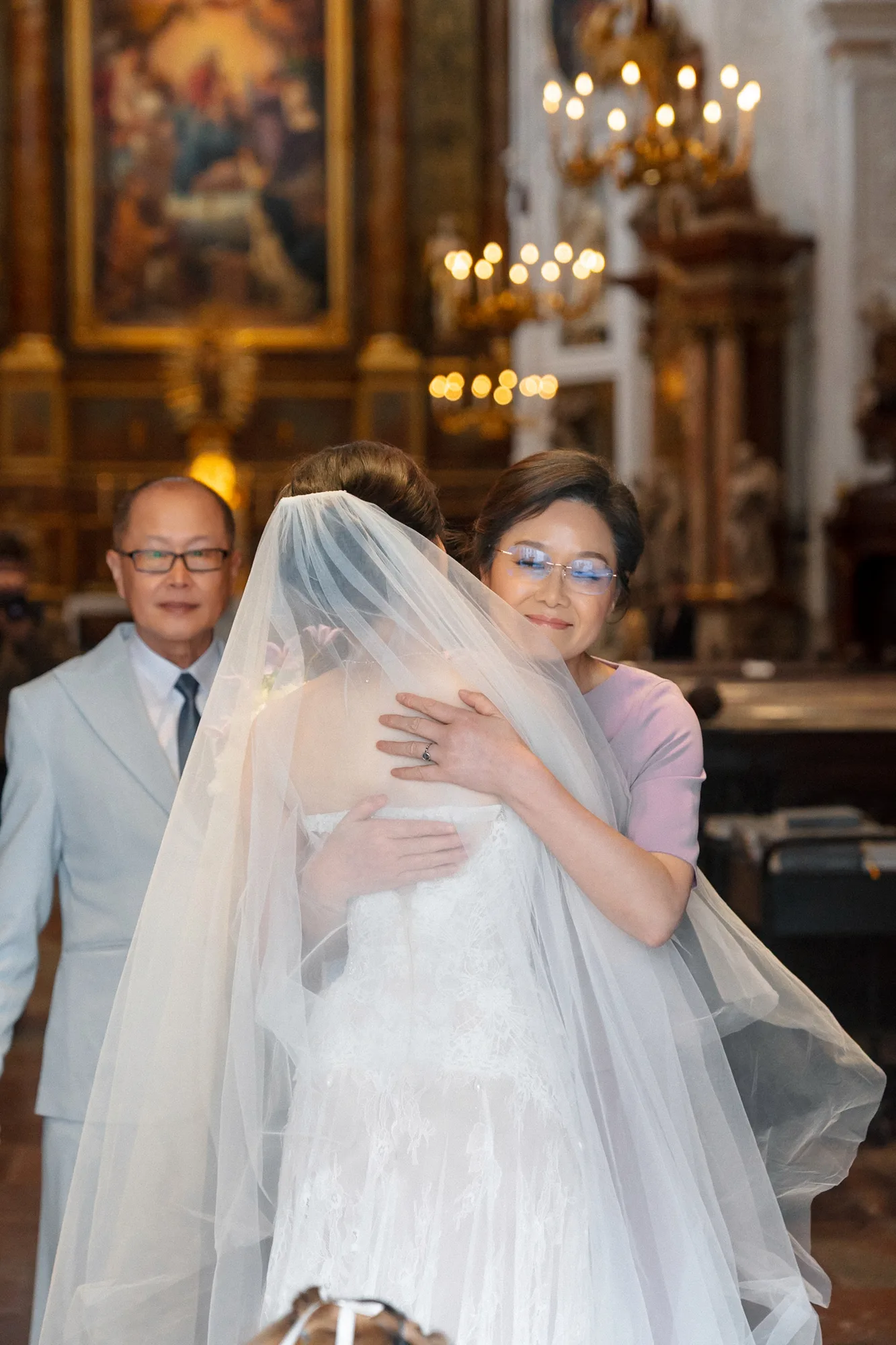
Some parts of a wedding lose something the moment a photographer steps in: the ceremony, parents seeing their child for the first time that day, speeches, a hug that lasts longer than expected, the first dance, the dance floor later on. These are moments to observe.
Asking for a repeat of a real moment usually gives you a weaker copy of it, so we would rather be in position early and stay quiet. This is where documentary skill matters most: patience, position, and knowing when not to speak.
Camera-shy couples often worry about this part, and there is no single phrase that solves it. Some people relax with a joke, some need reassurance, some simply need a glass of water. Sometimes the kindest thing is to step back and agree to make the portrait after the ceremony, when the nerves are gone.
How to recognise the balance in a photographer's full gallery
A portfolio or an Instagram feed shows the best frames from many weddings. It tells you what a photographer can do on a good day. To see how they balance direction and observation, ask for a complete gallery from one wedding and look through it from start to finish.
- Do the ceremony and speeches look observed, or arranged?
- Are guests part of the story, or do they disappear after the group photograph?
- Are the couple portraits varied, and do they take a reasonable share of the gallery?
- Does the editing stay consistent from a bright afternoon to a dark dance floor?
- Can you tell how the day felt, not only how it looked?
If almost every photograph is a portrait, expect a lot of direction on the day. If there are hardly any portraits, ask how the photographer handles them. Our wedding stories are a place to start: each one follows one wedding from preparations to the evening, from castles near Prague to Vienna, Denmark and Tuscany. For a step-by-step method, see how to choose a wedding photographer by reading a full gallery.
Questions to ask before choosing this approach
Whether you are hiring a photographer from your own city or a destination wedding photographer who travels to you, these questions show how they work, beyond what they deliver:
- When do you usually give direction, and when do you step back?
- How long do you normally need for couple portraits, and what happens if we have less time?
- How do you organise family photographs so they move quickly?
- What do you do when someone is uncomfortable in front of the camera?
- How do you work alongside the videographer during the ceremony and portraits?
- Can we see a complete gallery from a wedding similar to ours?
Listen for answers that depend on people and situations. A photographer who says it depends on you, and can explain how, is usually easier to spend a day with than one who follows a fixed script.
A RAW Studio example: Savoia Castle near Prague
Ivan and Jamilya planned their wedding themselves over eight months and married with 40 guests at Savoia Castle in Škvorec, east of Prague. Vitalie RAW photographed the day for RAW Studio, as wedding photographers in Prague, with video by Olgha Perfilova, and the gallery shows both approaches side by side.
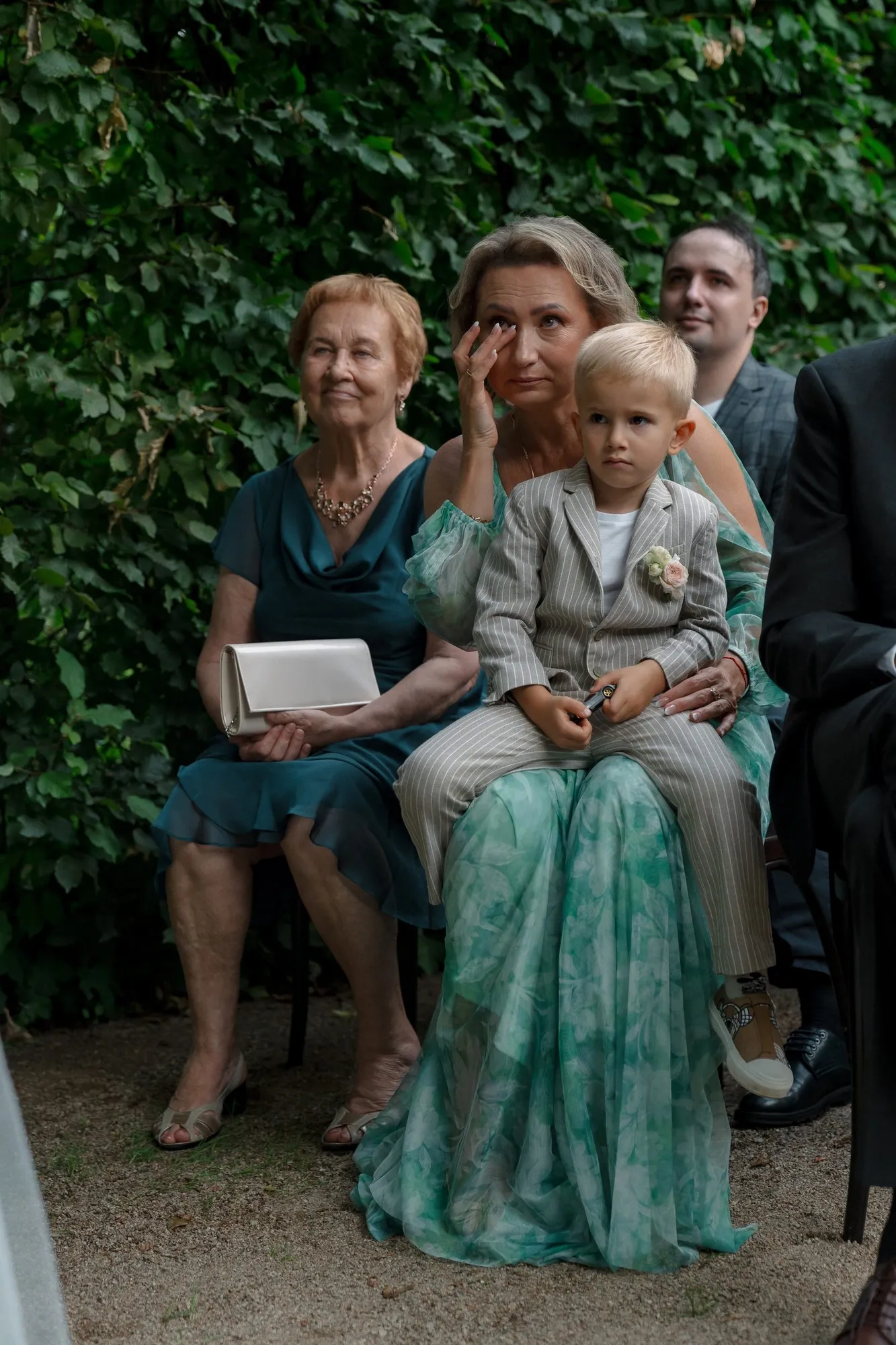
During the civil ceremony in the alley between the castle and the garden, we directed nothing. The photographs show Jamilya wiping away a tear, and a guest doing the same beside a small boy. Those frames exist because nobody interrupted the moment.
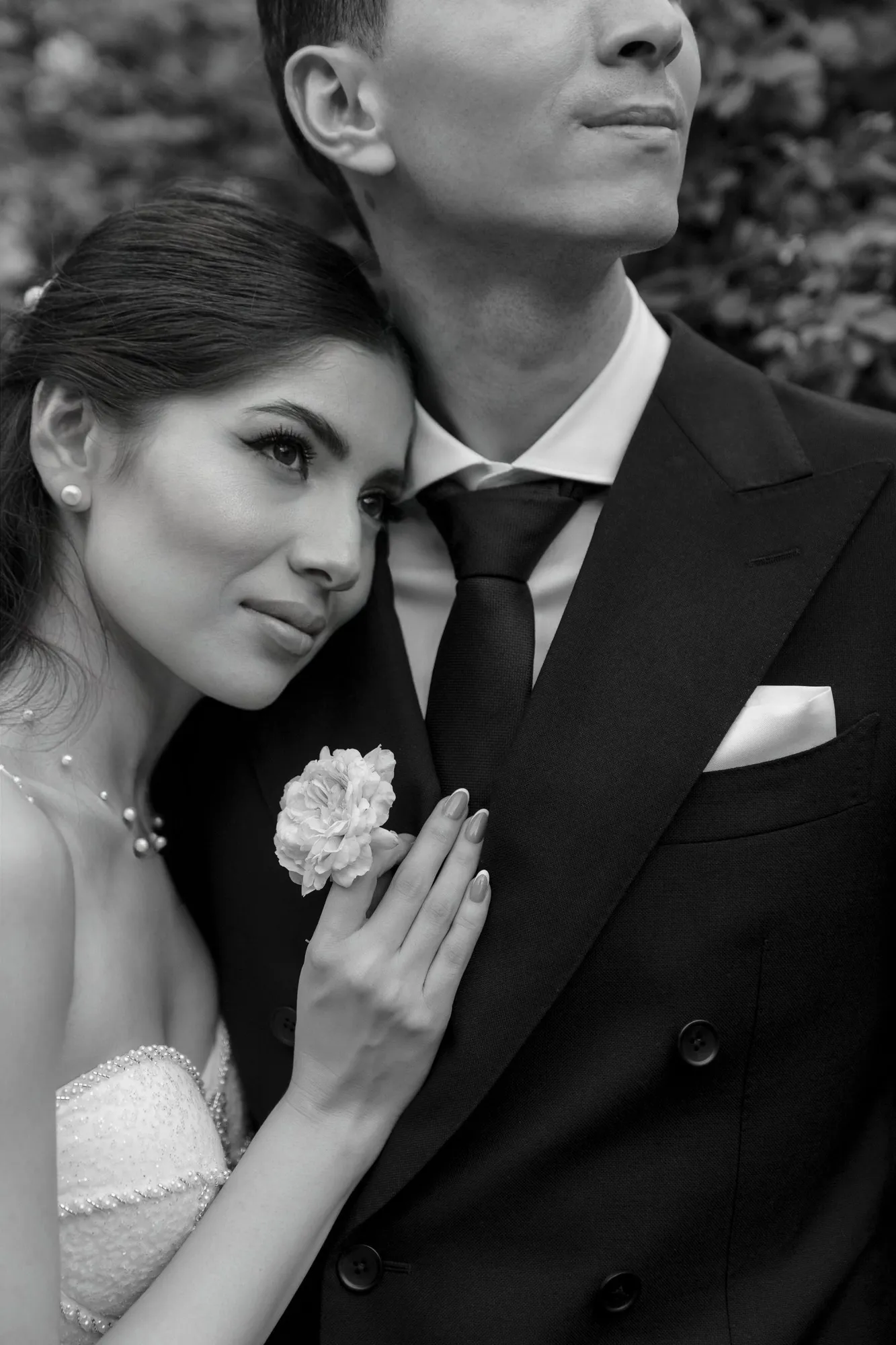
After the ceremony the couple took a private walk through the grounds, and that is where direction came in. We chose the red castle wall, the stone arch and the steps for their composition and light, showed Ivan and Jamilya which way to walk, and let them simply be together. The reception in the orchard, with its long table, citrus, candles, live jazz and dancing, went back to observation.
You can see the full story of Ivan and Jamilya and more about weddings at Savoia Castle.
Which balance is right for your wedding
If you are comfortable in front of the camera and love strong portraits, give your photographer a little more time for direction, ideally in good light, and let the rest of the day run on observation.
If you would rather forget the camera exists, ask for mostly documentary coverage, a short and well-placed portrait window, and family photographs organised from a list. You will still get considered portraits, just fewer of them.
If you are somewhere in between, choose a wedding photographer who can explain where they direct and where they step back, and whose full galleries show both. The right balance leaves you space to be present at your own wedding, with photographs that still look like you in twenty years.